
What Our Special Education System Says About Idaho’s Priorities
How Idaho’s failure to fund special education is robbing every child of the opportunities they deserve.
Most Idahoans know that our public schools are required by law to educate every child who walks through their doors. But what many people don’t realize is that when it comes to special education, that legal duty goes far beyond what our state actually funds. Across Idaho, school districts are struggling to balance their budgets not because they’re mismanaging money or overspending, but because they’re doing exactly what the law requires them to do—provide a Free Appropriate Public Education (FAPE) to every student with a disability. This isn’t optional. It’s federal law.
When a child is identified as having a disability that affects learning, the school is required to develop an Individualized Education Program, or IEP. It’s a written plan that spells out exactly what services that child needs to succeed—everything from classroom accommodations and therapies to specialized instruction or one-on-one support. Parents are part of the IEP team, along with teachers and specialists, and they meet regularly to review progress. Once that plan is signed, it isn’t a suggestion—it’s a binding legal document. The school must provide every service listed, no matter the cost. That’s what “appropriate public education” means under the Individuals with Disabilities Education Act (IDEA). It’s one of the strongest civil-rights guarantees in U.S. law, ensuring that students with disabilities are not left behind or excluded.
Providing those services, however, often costs far more than what the state provides. Imagine a district that receives roughly $10,000 per student in state and local funding and perhaps $15,000 for each student who qualifies for special education. That may sound generous until you look at what real costs can be. A single high-needs student in Idaho might require $50,000, $80,000, even $150,000 a year in specialized instruction, transportation, therapies, or one-on-one nursing care. There is no cap. The Supreme Court has repeatedly affirmed in cases like Rowley, Cedar Rapids v. Garret F., and Endrew F. that the needs of the student—not the district’s budget—determine what services must be provided. When that happens, districts must cover the entire gap out of their general fund, the same pool that pays for other teachers, textbooks, and extracurriculars.
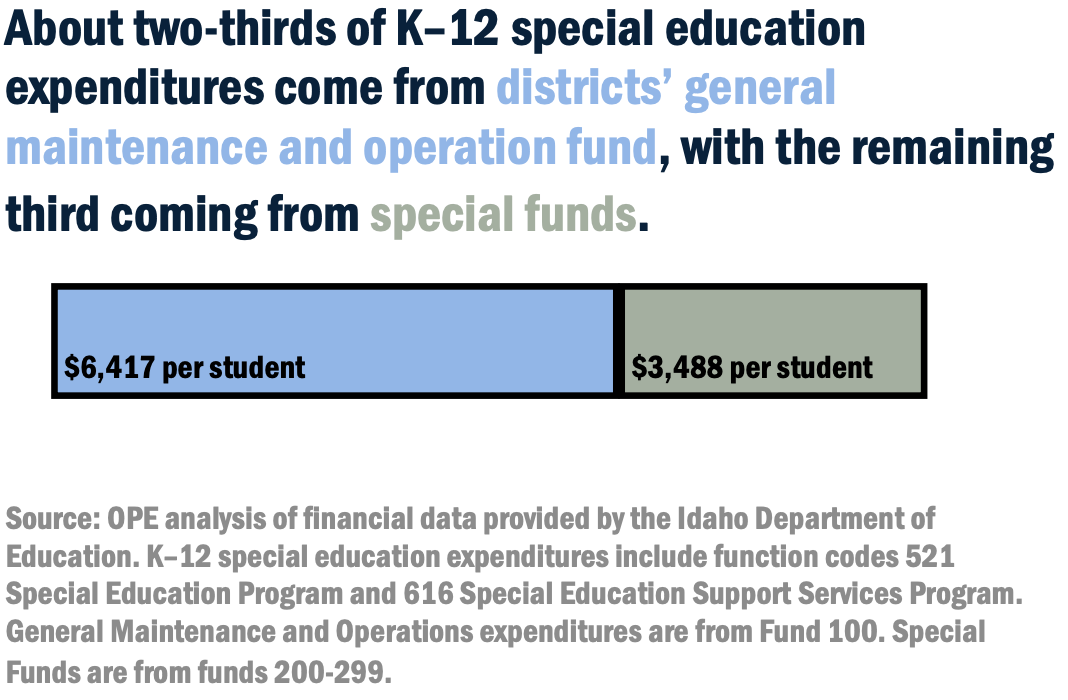
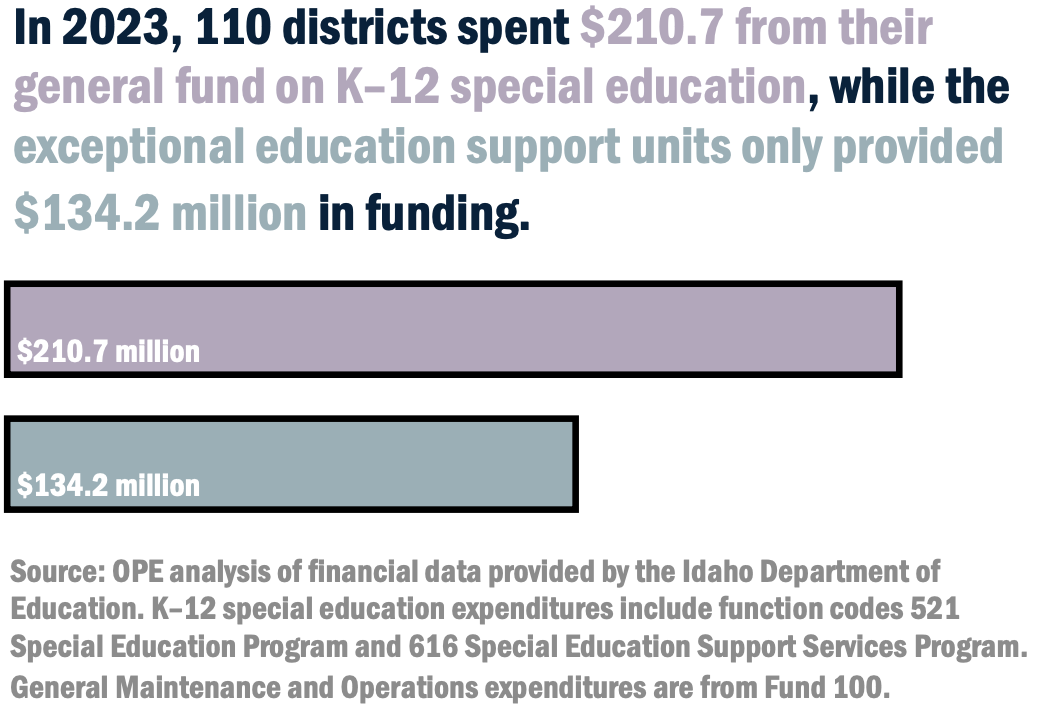
This is where the contradiction in our state policy becomes painfully clear. The Idaho Legislature is quick to talk about obeying federal law when it comes to things like immigration enforcement or federal health-care rules. Yet when the federal law in question is the Individuals with Disabilities Education Act—a law that commands every state to fund and provide services to children with disabilities—suddenly many of those same voices grow silent. When we underfund special education, we aren’t just shortchanging schools; we are breaking federal law.
Idaho’s outdated funding formula makes the problem worse. The state still uses a census-based model that assumes only about 6% of elementary and 5.5% of secondary students will need special education services.
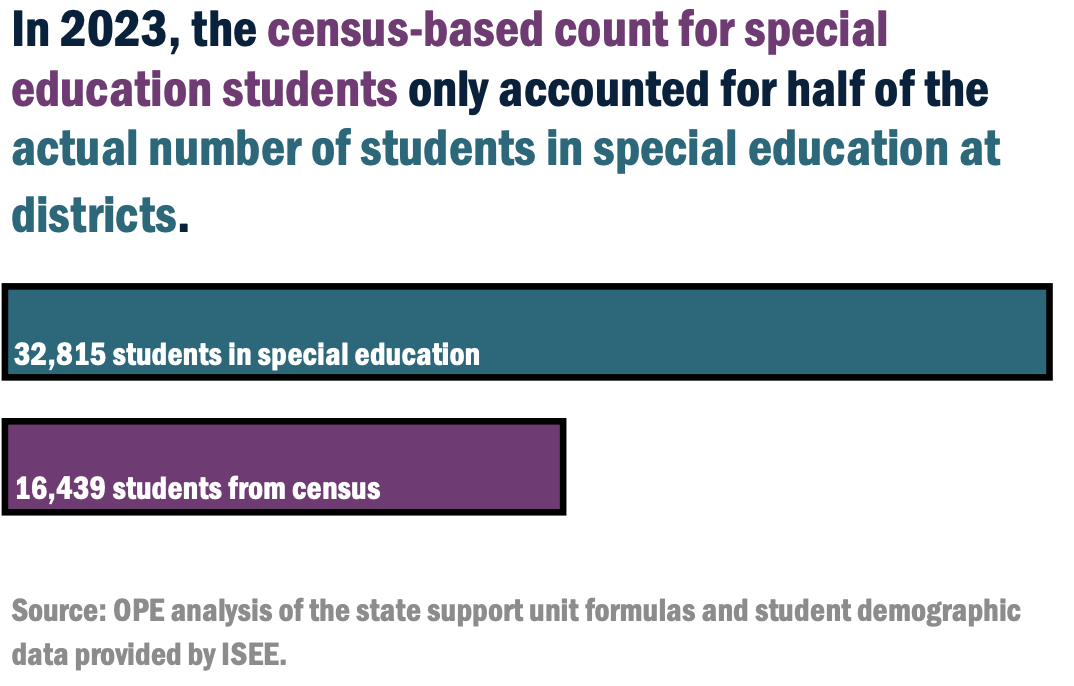
In reality, the percentage of students requiring these services in many Idaho districts is much higher—closer to 25% when you account for speech, behavioral, and developmental needs. Other states, such as Massachusetts and California, have moved to more responsive systems that fund based on actual need—using weighted-student or reimbursement models that adjust state support to match the true cost of services. Idaho’s approach, by contrast, locks districts into an outdated assumption that no longer reflects reality. And while Idaho educators have long prided themselves on doing more with less, the truth is we’re still funding with less—consistently ranking among the bottom five states in the nation for per-pupil spending. Superintendent Debbie Critchfield recognized this problem earlier this year when she requested a $50 million increase to Idaho’s special-education budget. Ironically, that is the same amount the Legislature recently allocated to subsidize private-school programs.
So we should be asking ourselves: Why are we okay funding private schools through HB93, which are not required to be funded by any federal law, but not okay fully funding the education of Idaho children with disabilities—which is required by federal law? Private schools and public schools don’t carry the same responsibility—private schools can choose whom to admit. Public schools can’t, though, and shouldn’t. They are the institutions that open their doors to every child, no matter the challenge or the cost.
During my committee presentation last session of House Bill 291, which would have created a high-needs special education fund, there were legislators who openly questioned why we integrate children with special needs with what they implied were “regular” kids—suggesting they should instead be segregated into their own schools. That idea isn’t just outdated; it’s illegal under federal law and runs counter to everything we’ve spent decades working to overcome. The Individuals with Disabilities Education Act guarantees that, to the maximum extent appropriate, children with disabilities are to be educated alongside their peers.
And the evidence shows why that matters. A study from Loyola University Chicago found that students without disabilities perform just as well—and often better—when they share classrooms with peers who have disabilities. Teachers in these settings use clearer instructions, more feedback, and more structured lessons that help everyone learn. And something deeper happens, too: students learn patience, empathy, and understanding. They begin to see value in people who are different from themselves. Those are lessons that last far longer than any standardized test score.
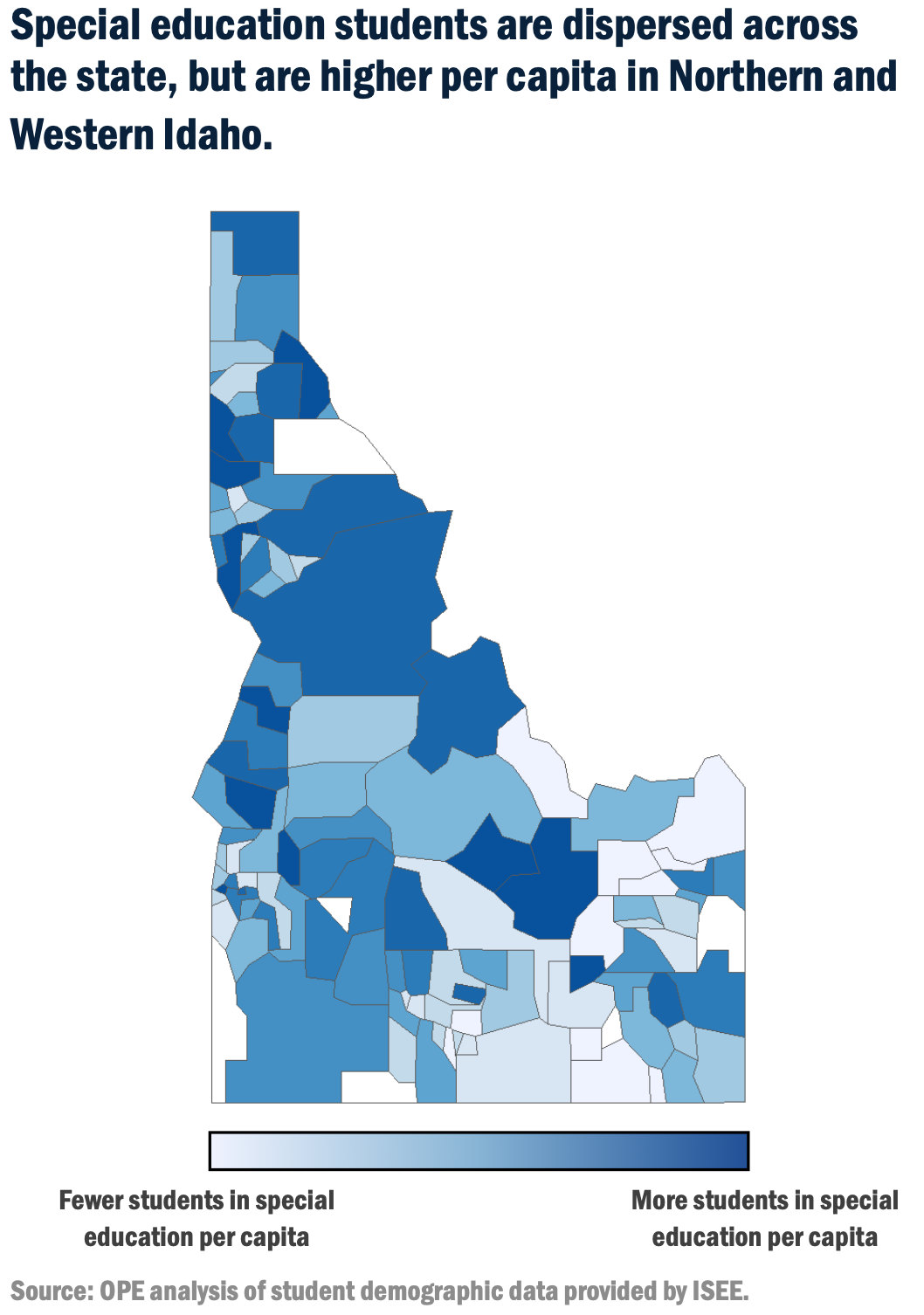
The truth is, Idaho’s funding system doesn’t reflect those same values. When we underfund education—when we build our budgets around outdated formulas and political convenience instead of actual need—it’s not the system that suffers, it’s the students. Districts are forced to divert limited resources just to comply with federal law, leaving less for every other program and every other child. Do we fund private schools—or do we follow the law? The law demands we provide an education for all children. Human decency demands we care about all children. And now Idaho must step up and do what is right.