
The Government Shutdown Is Exposing America’s Health Care Problem
For millions of families, the cost of care keeps climbing while Congress keeps fighting.
Right now, Congress is fighting… again.
The government is shut down, and once again both sides are pointing fingers — this time over health care.
Republicans argue they’re trying to protect taxpayer dollars and keep illegal immigrants from accessing Medicaid. Democrats say those same policies unfairly block coverage for hard-working, low-income Americans. Both have a point — and both are part of the problem.
At the same time, another fight is brewing over health care tax credits. Democrats want to restore the enhanced credits created under President Biden that capped premiums at 8.5% of household income. Republicans allowed those to expire, arguing the temporary relief was unsustainable and added to the deficit. Democrats say families are now being priced out of coverage. Again — both arguments have merit, but neither side is solving the underlying issue.
Regardless of where you stand politically, one thing is clear: our health care system is reaching a breaking point. The more complicated and expensive it becomes, the more appealing a single-payer, government-run system will sound — and that should concern everyone.
Here’s a real example from Idaho:
A family of four in Bingham County—Dad (41) Mom (39) and two kids (16 and 15)— earning $80,000 a year (just above Idaho’s median income of $74,000) saw big changes between 2025 and 2026. Their tax credits went down, and their premiums went up.
The cheapest Blue Cross plan went from $0/month to $169.65/month, with a $16,000 family deductible.
The best “Gold” plan more than doubled in price, even with a $4,000 deductible.
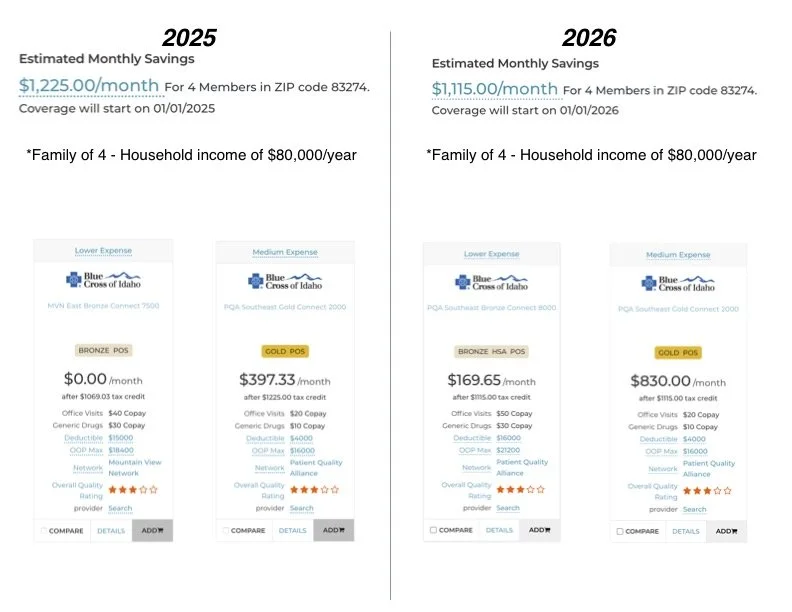
To put that in perspective, if a gallon of gas in Idaho ($3.55 today) rose at the same rate, it would cost $7.42 a gallon.
Can you imagine the impact such an increase would have on families — and on our economy?
And it’s not just the individual market that’s feeling it. Group health insurance costs for small businesses are climbing too — often by double digits. Employers are being forced to pass along higher premiums or reduce coverage just to stay afloat. Families who used to rely on stable, employer-sponsored plans are now paying thousands more each year, even before meeting their deductibles. Even the State of Idaho’s own employee health plan recently cut coverages because of unsustainable costs. Whether you’re self-employed, on the exchange, or covered at work, the story is the same: costs are rising faster than paychecks.
It’s no surprise that more Americans are turning to government-run health care for answers. According to Gallup, the share of Americans who believe the federal government should ensure health coverage for all has risen from 42% in 2013 to 62% today — the highest level in over a decade.
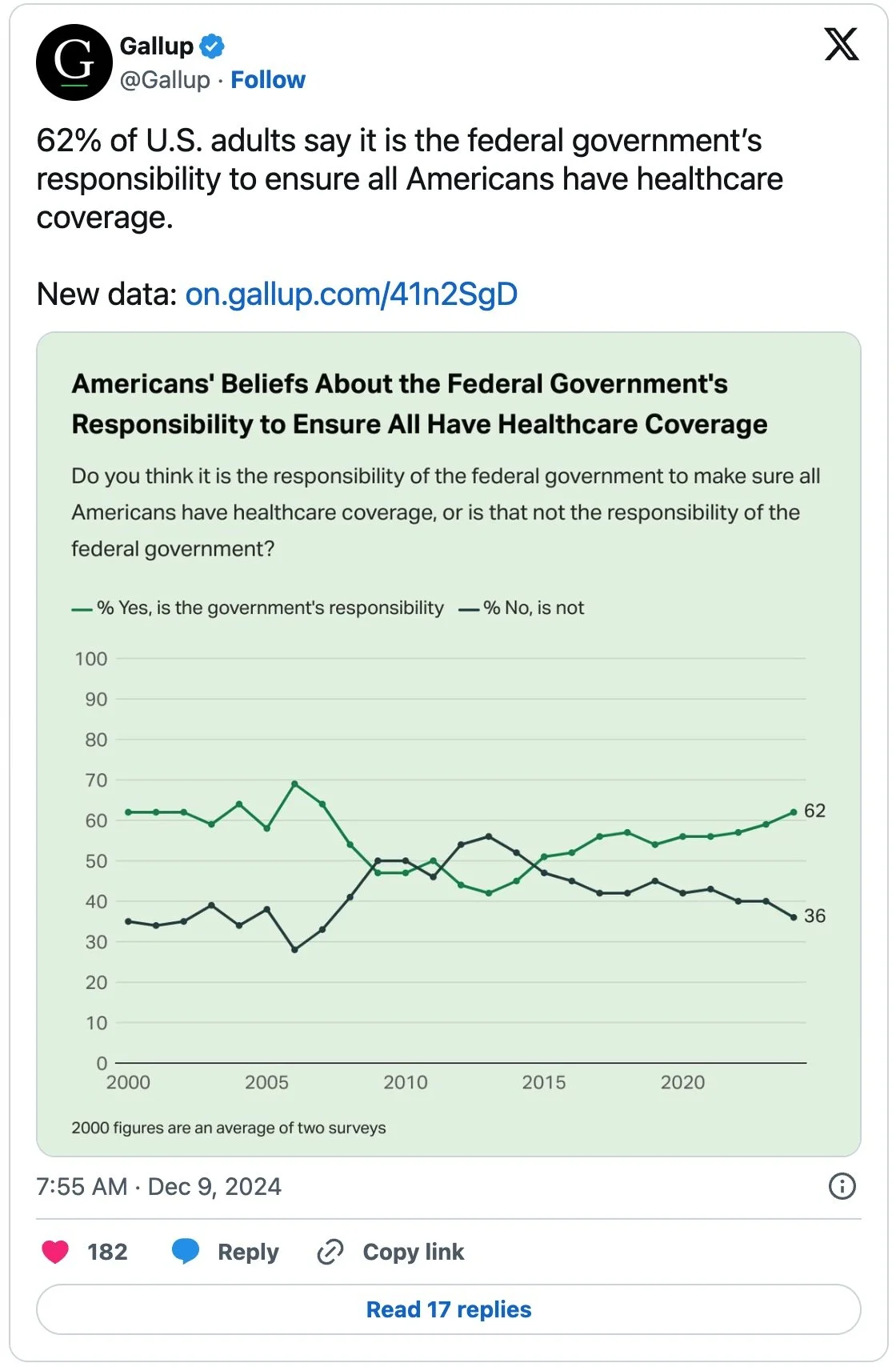
Health care costs are spiraling, and both parties keep using the issue as a political football. It’s time for serious, bipartisan solutions before frustration pushes Americans toward something even more drastic.
Health care reform won’t come from a single sweeping fix — it will take a series of thoughtful, practical steps. I shared one such idea in last week’s post, which you can find here.