
Idaho water in the halls of Congress
What our meetings in D.C. revealed—and how we’re preparing the next phase of Idaho’s water-storage plan.
This week, 32 Idahoans—farmers, water users, mayors, legislators, and community members—traveled to Washington, D.C., entirely on their own dime, with one purpose: to make sure Idaho’s water future is not ignored. No lobbyists. No advocacy groups. No sponsors. Just Idahoans who love their state enough to take time away from their jobs and families to stand together for a long-term vision. I was grateful to be one of them.
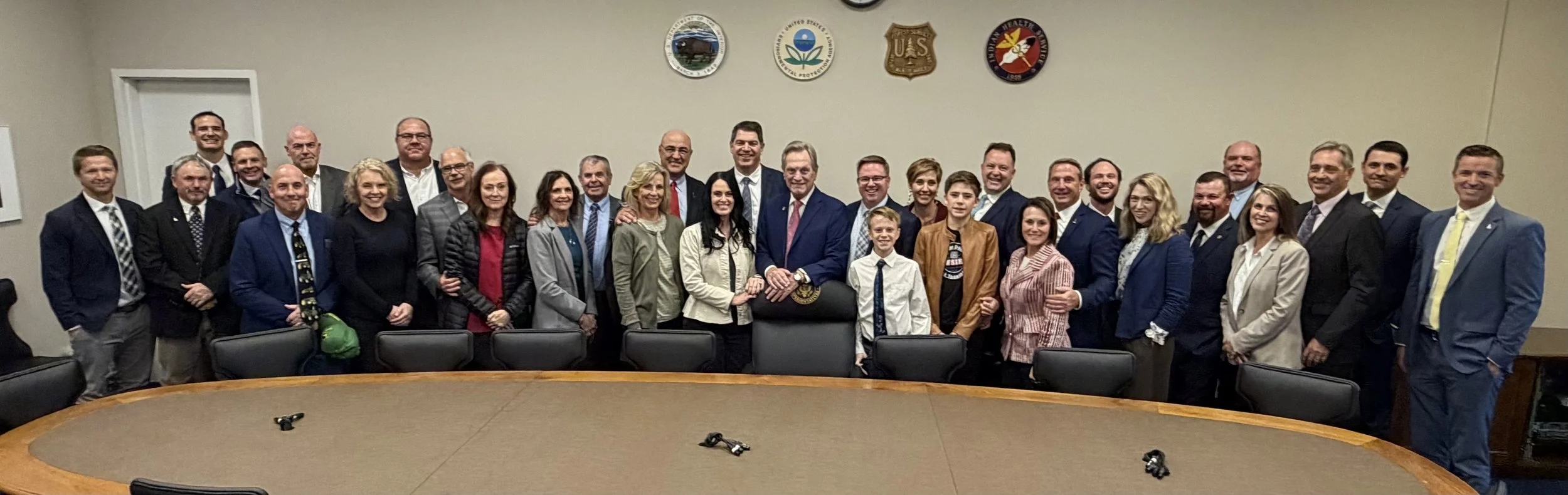
For months we’ve been gathering signatures, attending fairs, speaking at events, and asking Idahoans to join us in calling for increased water storage. That work led us to D.C., where we delivered just over 5,000 petition signatures from people across the state—a list of that continues to grow. After two days of meetings with our entire congressional delegation, I can say without hesitation that the trip was a success. Not because any one person solved the problem, but because Idaho showed up—united, organized, and serious.
Every person on the trip knows the story: Idaho is a high-desert state with a rising population, declining aquifer levels, and an aging reservoir system. More than a million acre-feet of water flows out of the Snake River system each year simply because we don’t have the capacity to store it. When we need it, it’s gone. When we have it—during runoff—we can’t keep it. This isn’t sustainable. Last session, the Legislature unanimously passed SJM101, asking federal partners to work with Idaho on expanding and updating our water storage plans. Idaho has already taken important steps—settling long-standing disputes between surface and groundwater users, allocating $30 million annually for water projects, launching a letter of interest for a basin-wide study with the Bureau of Reclamation, and accelerating recharge and conservation work.
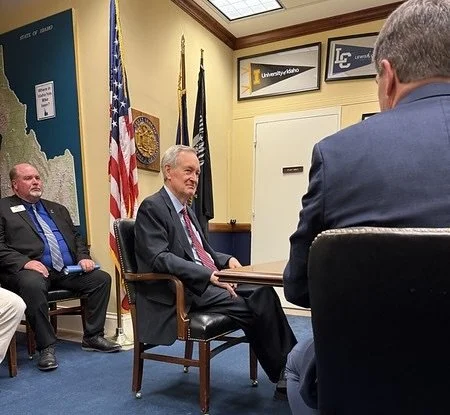
This trip was the next step: showing our federal delegation that Idaho is committed and that Idahoans are behind us. Over two days we met with Congressman Mike Simpson, Congressman Russ Fulcher, Senator Jim Risch, and Senator Mike Crapo. All four were supportive, engaged, and clear about the path forward. They each understand Idaho water in a way many in Washington simply do not. Many of them were in the state legislature—or in Senator Risch’s case, serving as governor—during past water conflicts. They know how essential water is to our economy, our communities, and our future.
They also emphasized how rare and valuable long-term planning is. When they saw our vision for 750,000 acre-feet of new surface storage by 2100, they encouraged us to keep planning on a 75-year horizon. Washington moves slowly, permitting takes years, and NEPA can delay major infrastructure long enough that costs double or triple. If we want meaningful progress within our children’s lifetime, we have to think big and plan early.
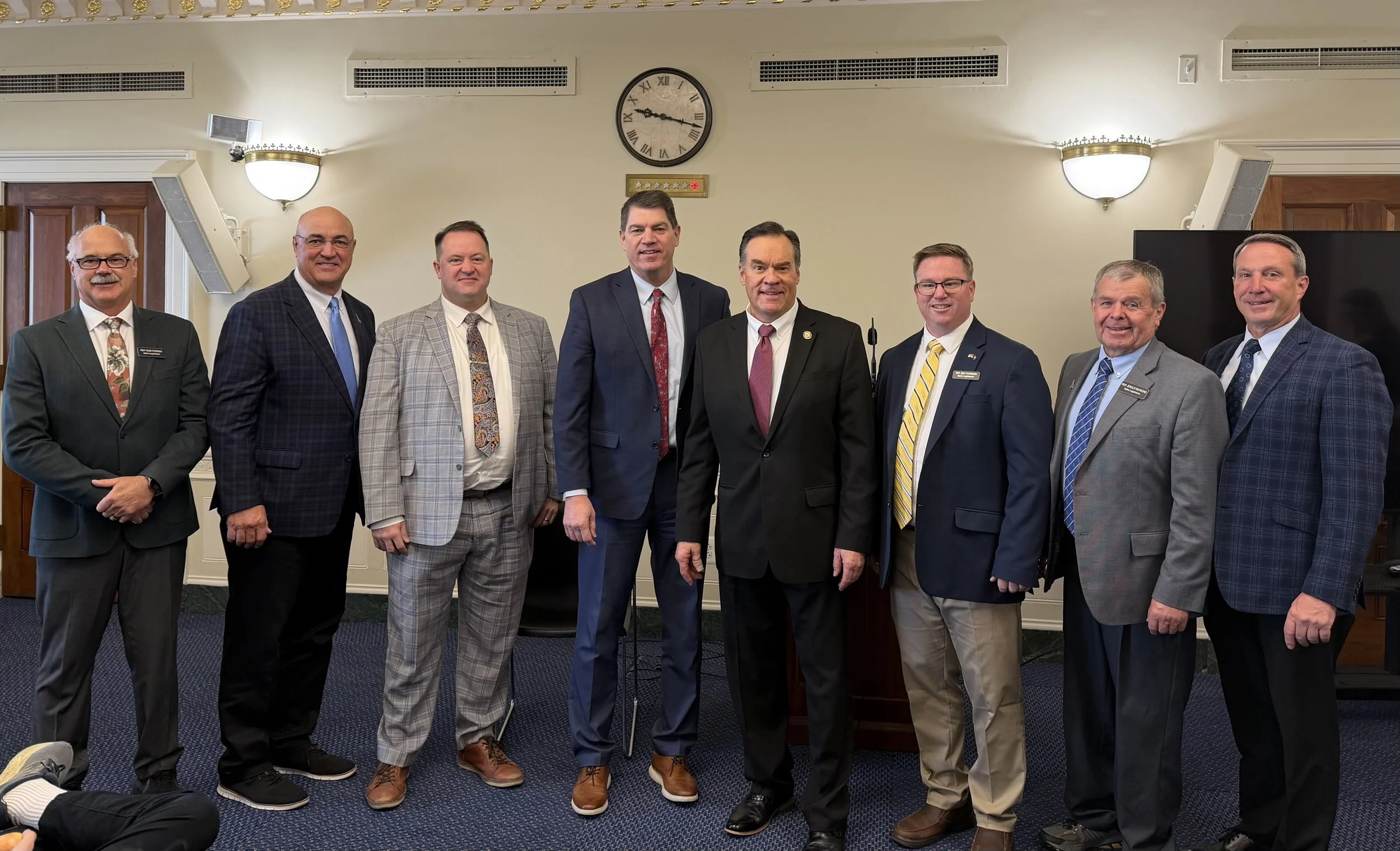
They were also honest about the reality of the challenge. The biggest obstacle isn’t Idaho. It’s the states east of the Mississippi—states with different climates, different water laws, and far more rainfall. As Congressman Fulcher put it, “They don’t understand water like we do.” Getting them to support Western water storage requires education and coalition-building, especially since major projects will eventually require 60 votes in the Senate. Senator Crapo was clear that Idaho will need allies in other Western and agricultural states, and now is the time to start building those relationships.
The most consistent message from our delegation was that we must return with specifics. Idaho has laid the groundwork, but federal partners need detailed requests—engineering, feasibility studies, timelines, cost estimates, and agency-supported recommendations. General appeals for “more storage” are not enough. Requests must be precise and defensible. Developing those specifics is now Idaho’s focus over the coming year.
We also heard a lot about NEPA reform. Every member of our delegation recognizes that permitting delays are among the biggest barriers to new reservoirs, dam raises, and infrastructure modernization. Encouragingly, major federal reforms are underway, including the SPEED Act and changes being advanced through the Natural Resources Committee. This could dramatically shorten timelines and bring predictability back into federal processes.
Our conversations also covered Ririe Reservoir and the antiquated winter drawdown curve that forces water releases long before irrigation season. Updating that rule could preserve thousands of acre-feet each year for irrigation and recharge. Teton Dam was also discussed at length. Support is strong, but it must be proven safe, feasible, and supported by Idahoans—which is why petition signatures, mayor and commissioner letters, and unified messaging matter. And once again, our delegation noted that recharge and surface storage are not competing ideas—they are complementary. Storage creates the ability to recharge strategically, instead of watching water leave the system.
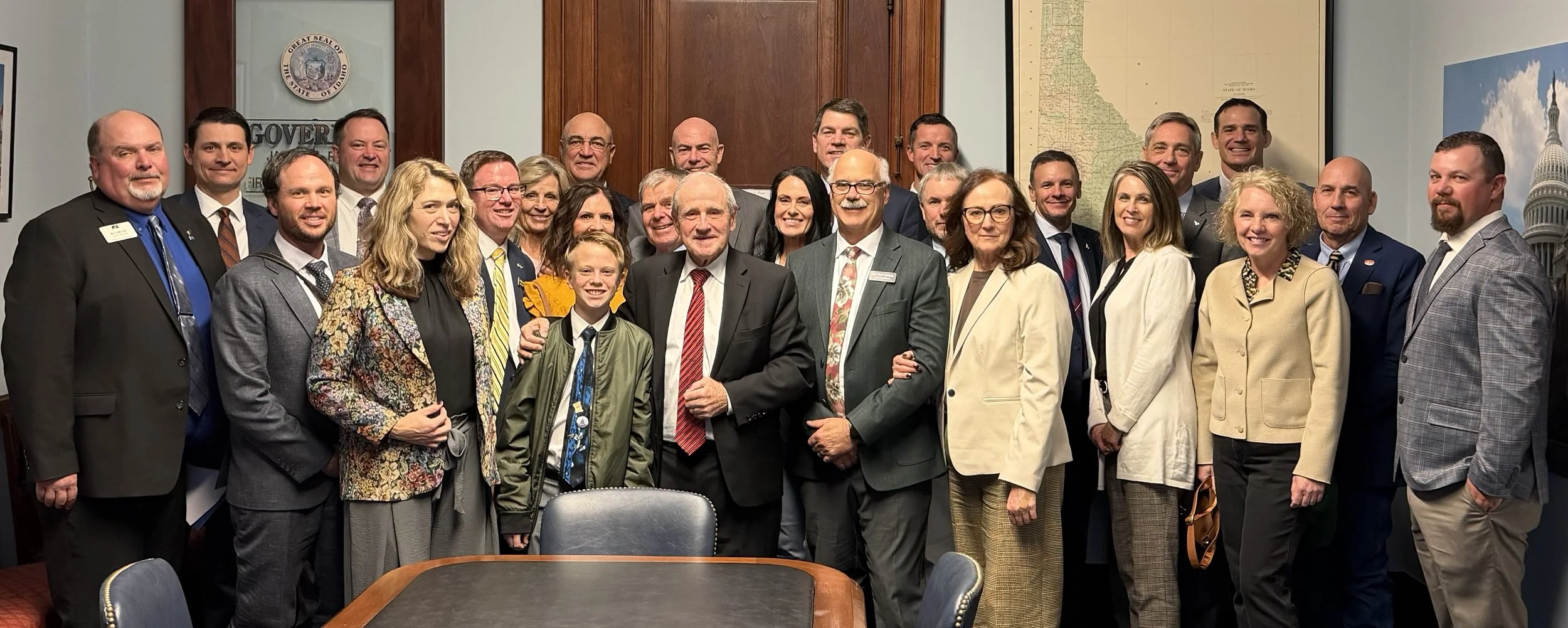
I also want to express deep gratitude for the Idahoans who traveled with us. They represented every corner of eastern Idaho—farmers, ranchers, water districts, mayors, legislators, families. They took time off work and paid their own way. And they showed Congress what Idaho resolve looks like. These weren’t critics or complainers; they were builders—people who love their state and want to plan for its future.
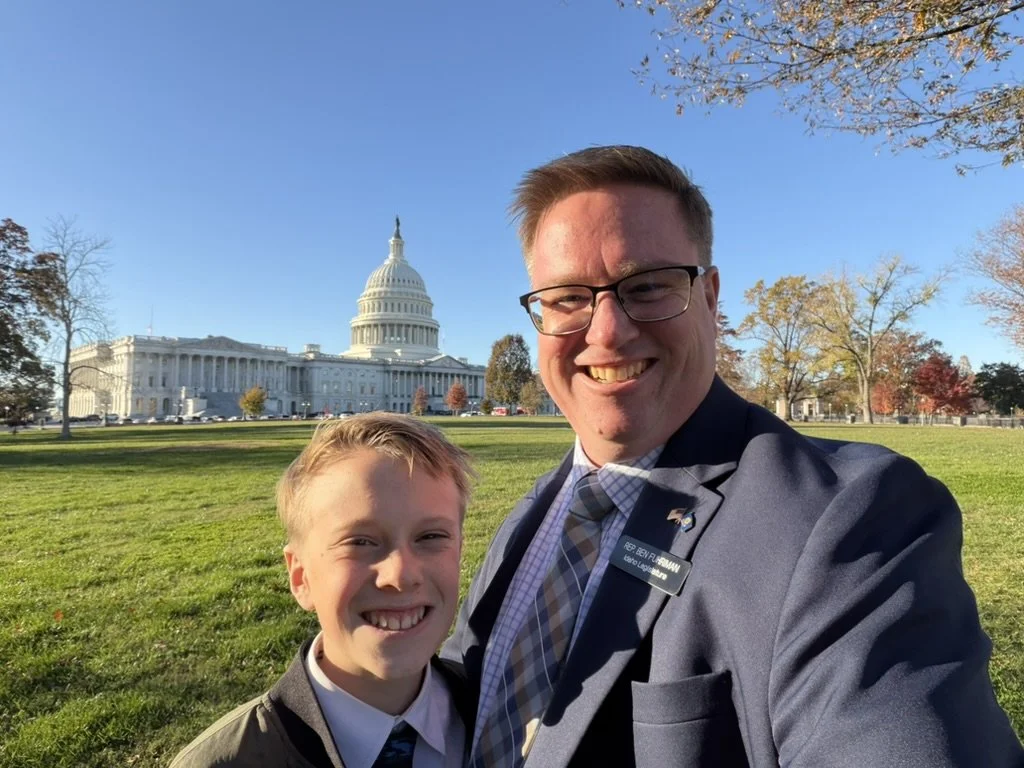
I was also fortunate to bring my almost fourteen-year-old son, Stuart. We arrived early to see the monuments and museums together, and I watched him take in the history of our nation with new eyes. Later, as he sat in congressional offices listening to discussions about water, it hit me how much this work is about the generations that follow us. Someday this will be his Idaho. Trips like this help him understand why we fight for it.
The message from Washington was clear: Idaho is on the right track. Now we need specifics. Over the next year we will begin detailed studies, prioritize feasible projects, build cost estimates, develop engineering recommendations, strengthen our statewide coalition, expand alliances with other Western states, and return to D.C. with focused, precise requests for federal partnership.
Thank you to everyone who signed the petition, shared the message, or simply paid attention. You made this possible. If you haven’t added your name yet—or if you know someone who would like to—please consider signing at www.keepidahowater.com. We will continue collecting names as we prepare for the next phase of this effort.
I promised my constituents I would make water a top priority, and this trip was another step in that commitment. Not because I have all the answers, but because I care deeply about Idaho’s future and I’m grateful to be part of a team willing to do the work. Water is life in Idaho, and together, we’re working to protect it for generations to come.